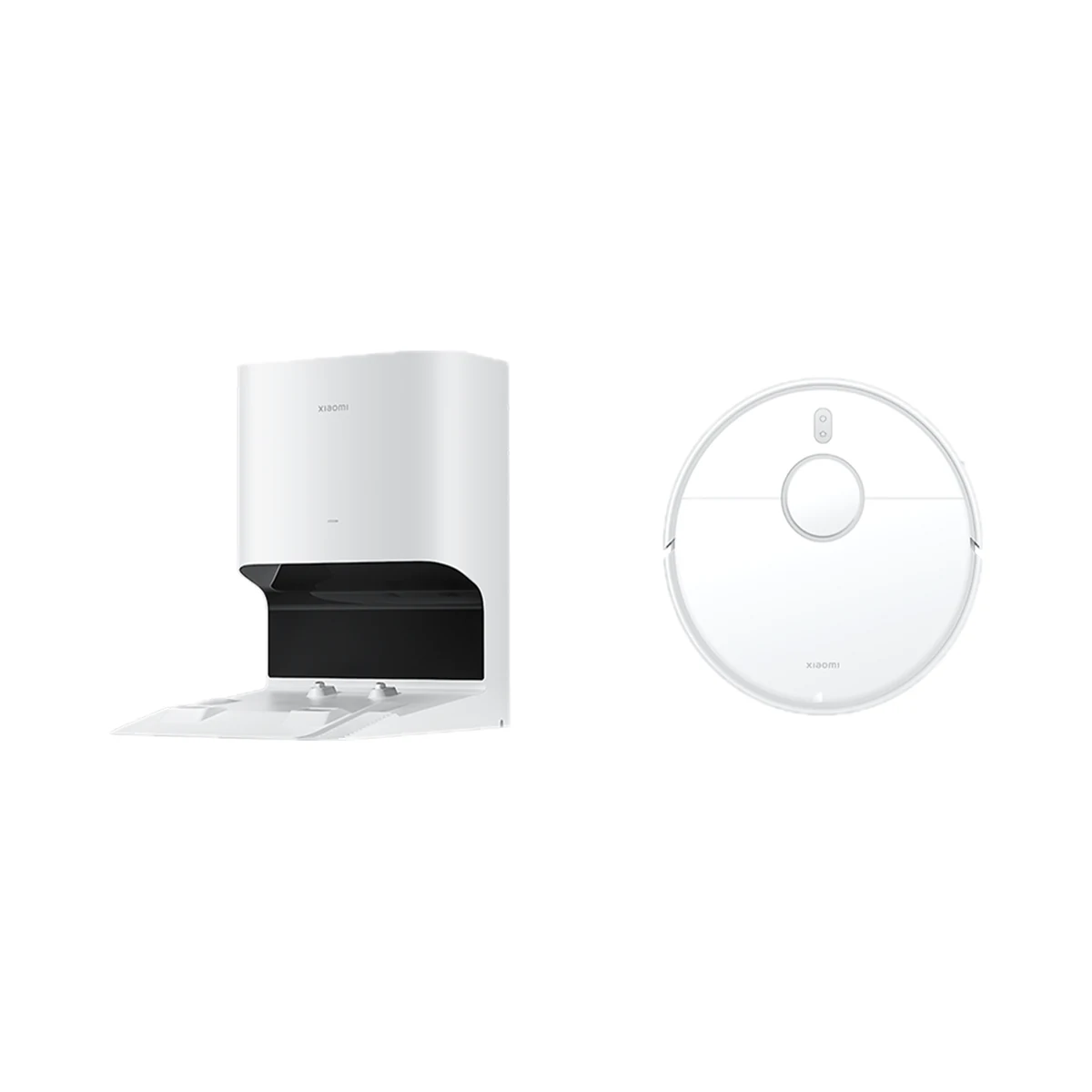
Robot vacuums
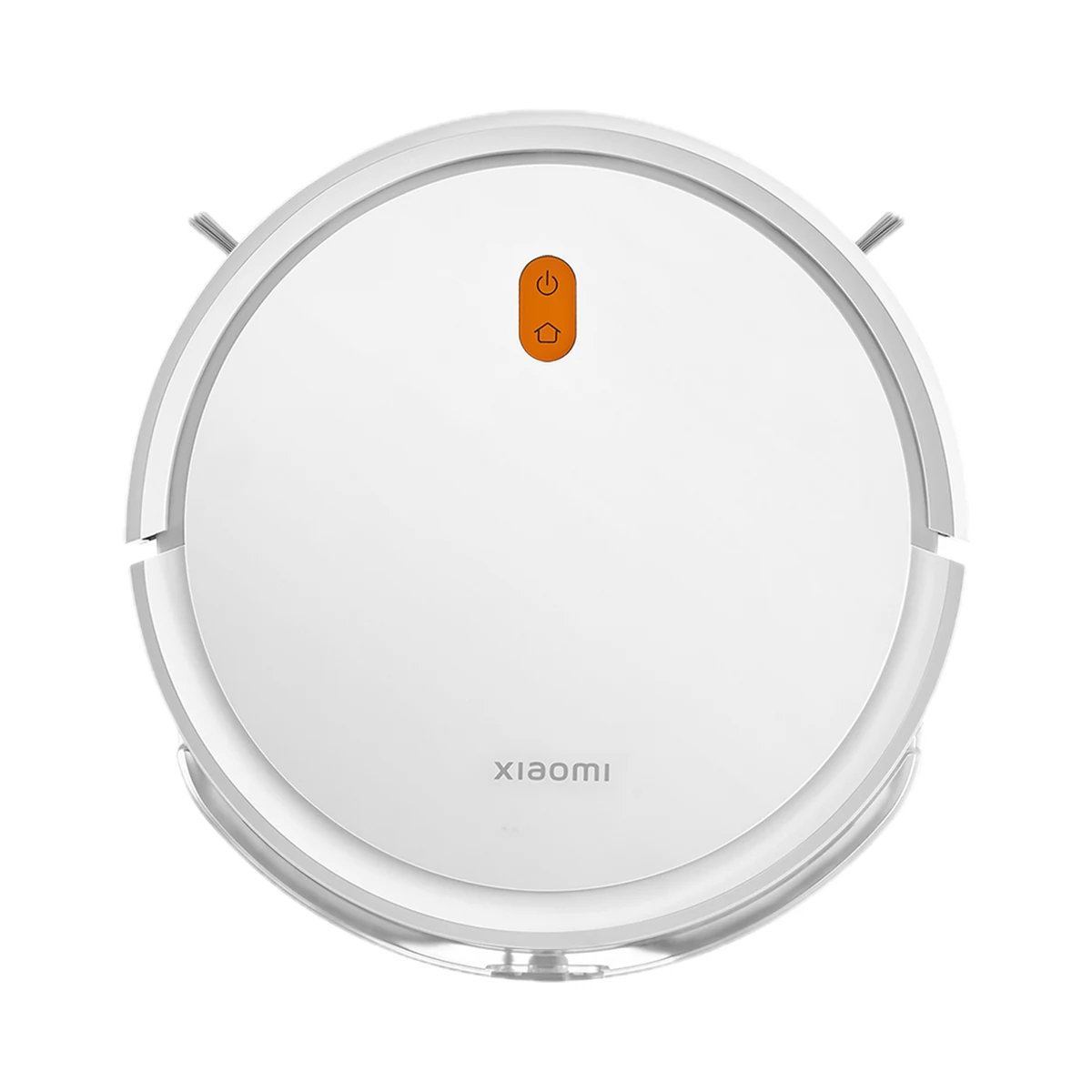
Xiaomi Robot Vacuum X10 robot vacuum with auto-empty station, 4000 Pa, LDS navigation
- Maximum suction
- 4000 Pa
- Base station
- Auto-empty station
- Mopping system
- Static mop pad
Model: B102GL
5,999 MDL
1 left
Xiaomi · B106GL
Manufacturer images
Vacuums and mops in a single pass — 4000 Pa, LDS laser navigation and up to 130 minutes of runtime.
22 specifications from manufacturer documentsWe deliver across Moldova. Availability, delivery timing and cost are confirmed with a manager before order fulfilment.
The right choice starts with specifications
SKU: BHR7328GL · Document model: B106GL
Specifications checked against the linked manufacturer documents.Checked 18 October 2026
Maximum suction — what it meansThe maximum vacuum the fan creates, according to the manufacturer, in pascals (Pa). A higher value means a stronger pull, most noticeable on carpets and in floor gaps; makers measure it in the strongest mode on a full battery, and in everyday modes the robot runs weaker and quieter. | 4000 PaTested at 16.5 V, Shanchuan Laboratory data. Four modes: Silent, Standard, Medium, Turbo [1] |
|---|---|
Base station — what it meansWhat the base does besides charging. An auto-empty station sucks the dust out of the robot into a bag; an all-in-one station also washes the mops and refills the robot with clean water, so you step in less often, but it is much larger and needs space near a socket. | Charging dock onlyCDZB106GL charging dock [2] |
Mopping system — what it meansHow the robot mops. A static pad wipes the floor by sliding over it and suits daily freshening; a vibrating pad, rotating mops and a roller scrub actively and cope better with dried-on stains. | Static mop padPad on a holder under the combined dust-and-water container; three water levels; a Y-shaped mopping path is available [1] |
Area cleaned per charge — what it meansHow many square metres the robot covers on one charge in the manufacturer's tests. It helps relate the model to the size of your home; test conditions (mode, floor type) are in the note. | Not stated by the manufacturer |
Robot dustbin — what it meansThe volume of the dust container inside the robot. Without an auto-empty station you empty it by hand — the bigger it is, the less often; with a station it is emptied automatically after a run, so its size matters less. | Not stated by the manufacturer |
Robot water tank — what it meansHow much mopping water the robot itself holds. For models without a mop-washing station this is the water for the whole run; with an all-in-one station the robot tops up at the base, and its own tank may be small. A combined dust-and-water container is mentioned in the note. | Not stated by the manufacturer |
Threshold climbing height — what it meansThe threshold height the robot can climb, according to the manufacturer. With high door thresholds or thick-backed rugs this limit matters; test conditions (single or double threshold) are in the note. | Not stated by the manufacturer |
Extending parts for edges and corners — what it meansWhether the robot can push its side brush or mop out beyond the body along walls, into corners and around furniture legs. A round body without extending parts leaves a strip along walls and in corners that the brush and mop do not reach. | NoneNeither the description nor the device diagram in the manual shows an extending brush or mop [2] |
| Suction power levels | 4 [1] |
Navigation and mapping — what it meansHow the robot finds its way. An LDS/LiDAR laser builds an accurate map of the home even in the dark and lets you split it into rooms and set no-go zones; a vSLAM camera depends on lighting; a gyroscope robot drives in a zigzag without a room map. A rotating LiDAR turret adds to the body height. | LDS / LiDAR laserLDS laser sensor on top: range up to 8 m, 6 rotations per second, over 2,000 samples per second. Room splitting, no-go zones, multi-floor maps [1] |
|---|---|
Obstacle detection — what it meansHow the robot notices small items on the floor: cables, socks, shoes, pet accidents. A bumper and IR sensors react on contact or near walls; structured light and a 3D sensor measure an object's shape and steer around it in advance; a recognition camera also identifies what the object is (the number of object types, if published, is in the note). | Bumper and IR sensorsTwo infrared collision sensors and four cliff sensors; the LiDAR helps reduce bumps. The sensor list has no camera or line laser [3] |
| LiDAR range | 8 m [1] |
Runtime per charge — what it meansHow many minutes the robot cleans on a full battery, according to the manufacturer. This is usually stated for the quiet or standard mode without mopping; the test mode is given in the note. | 130 minStandard mode, open space, ±10 %; Shanchuan Laboratory data [1] |
|---|---|
Battery capacity — what it meansThe built-in battery’s rated capacity. Run time also depends on how the device is used. | 3200 mAhNominal capacity 3200 mAh, rated (minimum) 3000 mAh [2] |
Rated power — what it meansThe rated or maximum power draw from the spec sheet. It sets the load on the socket and the energy use. | 45 W [3] |
| Battery voltage | 14.8 [3] |
| Station power input | Dock: 20 V ⎓ 1.2 A from a 100–240 V ~ 50/60 Hz adapter (20 V, 1.2 A, 24 W); standby ≤ 0.5 W [2] |
Robot height — what it meansThe full body height including the LiDAR turret, if there is one. Compare it with the clearance under your sofa, bed and cabinets: the robot gets under furniture only if the gap is higher than this. | 94.5 mmHeight from the manufacturer's dimensions (diameter × height); the body has a LiDAR turret [3] |
|---|---|
Robot dimensions — what it meansThe device’s size in millimetres as the maker states it. Check that it fits the wall box, niche or shelf. | 350 × 94.5 mmDiameter × height [3] |
Station dimensions — what it meansSize of the charging dock or station in millimetres as the manufacturer states it. All-in-one stations are much larger than a simple dock: check the space by the socket and the clear area in front of the station for the robot to dock. | 152 × 74.6 × 99.5 mm [2] |
Weight — what it meansThe device’s weight without packaging, per the maker. | 4800 gStated this way on both the specs page and in the manual (4.8 kg) [3] |
App — what it meansThe maker’s app used to set up and control the device. | Mi Home / Xiaomi Home [1] |
|---|---|
Home Assistant — what it meansHow the device connects to Home Assistant: a built-in integration, a Zigbee coordinator, Matter or the maker’s cloud integration. | Not stated by the manufacturer |
Connectivity — what it meansThe wireless link or network the device uses. Wi-Fi connects straight to the router; Zigbee, Thread and Bluetooth Mesh work through a hub or gateway. | Wi-Fi, Bluetooth LEWi-Fi IEEE 802.11b/g/n 2.4 GHz, Bluetooth 4.2 [2] |
| Package contents | Robot, main brush, 2-in-1 dust and water container, side brush, 2 filters, brush cover, mop pad, mop holder, power adapter, charging dock, cleaning brush, user manual [3] |
|---|
We deliver across Moldova. Availability, delivery timing and cost are confirmed with a manager before order fulfilment.
A website order is submitted for confirmation without charging your card. The payment method and final amount are agreed with a manager before payment.
The warranty is at least 12 months. The exact period and conditions for equipment and installation work are stated in the sales documents and the accepted proposal. Further support is agreed for each project.
Current conditions are published on the Return policy page. Email office@casasmart.md with your order number for the steps relevant to your situation. Statutory consumer rights continue to apply.
In your home
The robot vacuum cleans on a schedule or on command from the app. The home map lets you set zones and no-go areas; smart home integration depends on the model and platform.
CasaSmart
Robot vacuums
Model: B102GL
Robot vacuums
Model: RRA0TCP
Robot vacuums
Model: D109GL
Robot vacuums
Model: C108
Buy just a device, add installation, or hand the whole project over to us.